Workforce
October 15, 2026
If Paid Family Caregivers Will Not Finish the Training, Blame the Training

Train and pay family caregivers? Yes, says Monika Virk, but only after rebuilding the chronic care model underneath. Otherwise you're training people to execute a system that already fails.

Paul Kusserow, who ran Amedisys and now runs Careforth, told Home Health Care News last week that the episodic, visit-based home health model will not be enough for the chronic disease crisis. His answer: train and pay the people already in the home. Family members in Medicaid waiver households, doing everything but the clinical.
One distinction before we go further. Kusserow was talking about home health, which is skilled care. His solution, though, training and paying family members in Medicaid waiver households, lives in the non-skilled world. That is where the rest of this conversation lives too: Medicaid programs, family caregivers, the safety net around them. Home health is skilled. This is not. Keeping the two straight matters, because they have different owners, different rules, and different failures.
He is right about the direction. I want to say that first, because what follows could sound like I am pulling his idea apart. I am not. It is a good idea. It is just incomplete, and the missing piece is bigger than training.
Here is the problem. In the non-skilled world, the brokenness is not in the payment. It is in the skill, in what the caregiver actually does once inside the home. Today's paid caregiver walks in with generic, check-the-box training, the same content regardless of the conditions in that home. Few agencies provide good disease-specific training. And even that, where it exists, is not sufficient for the reality of the work: multiple chronic conditions in one person, and a family asking questions nobody prepared the caregiver to answer. This model would hand family caregivers a role the paid workforce itself was never equipped to play.
So the question is not whether family caregivers can be trained. They can. The question is what we are training them to execute.
I believe there is a clear, safe role for the family caregiver, and it starts with the one thing no clinician can replicate: they know the patient. A daughter knows when her mother is not eating well. She knows when she is more tired than yesterday, drowsier than yesterday. That is not diagnosis. That is observation. And observation, reported early, is the most valuable signal in chronic disease management.
Discharge planning already asks families to do this. The failure is not the ask. The failure is the method. Verbal instructions and a single teach-back, then we hand over the whole thing and hope. That is not training. Training is structured and methodical. It happens over time. And comprehension gets verified before the handoff, not assumed after it.
We already have proof that the current approach to training family caregivers does not work, even when every incentive is aligned. In Pennsylvania, under Community HealthChoices, a Medicaid family caregiver cannot be paid directly. The money flows through a licensed agency or a fiscal intermediary that hires them, with required training and orientation. They are on payroll. They are getting a paycheck. And agencies still struggle to get them through the training. If paid employees will not complete it, the problem is not motivation. It is the training itself, and the model underneath it.
One state is pointing at the answer. In Washington, the caregiver contract pays more for training: an extra $0.25 an hour for home care aide certification, another $0.25 for advanced training. Training stops being a compliance checkbox and becomes a raise. It is the rare program that treats the caregiver's skill as something worth investing in, and it is the exception that proves how empty the rest of the landscape is.
That is the sequence problem. You cannot train family caregivers on top of a broken chronic care model and expect a different result. The model has to be rebuilt first. Then technology builds the system that runs the model. Then education and training for formal and informal caregivers get built on top of that. Foundation first, training second. Skip the foundation and you are asking the least prepared person in the chain to execute a system that already fails the most prepared.
What does a real foundation look like in practice? It looks like support. Real support, not a pamphlet and a phone number.
Ask any family caregiver what the hardest part of the day is. It is not the tasks. It is the questions. Should I give her this or that? Is this food within her diet? She has had this much fluid, is that too much? The questions pile up from morning to night, and every unanswered one builds anxiety. The caregiver's anxiety and the patient's anxiety feed each other. And anxiety, left alone, turns into either a false deterioration or a true one. A panicked call. An ER visit that did not need to happen. Or a real decline that nobody caught because nobody was there to ask.
The foundation of chronic disease management is a safety net under that caregiver. Someone is there when the questions come. Not a phone number that goes to voicemail. A system.
I know this can work because I built it. During COVID, for a health system, we put a triage tool in the hands of family caregivers. It was not telehealth. Telehealth is a good technology, but it does not fit every moment, and it asks more of a worried family member than they can give at 9 PM. This was lower. Less invasive. The caregiver opened the tool, answered a systematic set of questions, and got a response at the end.
Take the hardest call: Mom is not breathing very well. The tool walked the caregiver through the questions, and then it said, based on everything you told me, your mom is fine. A nurse is going to call you in the next 10 to 15 minutes. She will triage your mom. If she needs to escalate, it goes to a virtual visit with a physician in the morning, or we call in services.
Read that again. The most powerful sentence in the whole exchange was not the assessment. It was: a nurse is going to call you in 10 minutes. That is the safety net. That is what relieves the anxiety. And with today's technology, that system can be built at massive scale without breaking the bank.
It worked beautifully. And then it died, the way these things die. Not because the technology failed. Because of bureaucracy.
The triage touched three or four services, and every one of them had a different owner. The nurse could come from home health or from the hospital. The urgent care could belong to the hospital or to a separate safety net doing virtual visits. If it escalated to EMS, the rules about treating on site changed by state. The health system had every resource the model needed. What it did not have was aligned leadership. Everyone owned a piece. Nobody owned the outcome. Misaligned incentives will kill a working model faster than any technology failure.
That brings us to ownership, because someone has to own the safety net. Start with the hospital. People assume hospitals want to keep the ER empty. That is a misnomer. They want the ER busy with ER-level care. High-acuity, high-revenue cases. What they do not want is the ER bogged down with low-revenue codes. So the hospital's incentive actually supports triage, just for its own reasons.
On the skilled side, home health owns the patient but not the nurse line. But this is a non-skilled conversation, and for Medicaid, the owner should be the state. The state pays for the whole chain, so the state is the only party whose incentive covers all of it. But state ownership means politics and bureaucracy layered on top of the bureaucracy that already killed the model once. It is messier. It is also correct.
And states are trying, in pieces. Oregon just launched Agency with Choice, letting Medicaid-eligible adults recruit and manage their own in-home providers. Pennsylvania hires family caregivers through agencies. Every state has its own experiment. What none of them has is a cohesive strategy: a foundation, a system, and training built in that order, with one owner accountable for the outcome.
There is one more gap in this conversation, and it is a big one. Almost nobody has explained palliative care and hospice care to these families. Not really. Not in plain language, and not before the crisis.
A family caregiver watching her mother decline over months will eventually face decisions about goals of care, and she will face them with almost no good information. Most families cannot tell you the difference between palliative care and hospice. In a University of Michigan poll, nearly two-thirds of older adults said they knew very little about palliative care. They do not know what hospice covers, when someone qualifies, or that choosing hospice is not giving up. They learn about it for the first time from a hospital discharge planner, days before a decision has to be made. Or they never learn about it at all.
That has to be part of the safety net. The same system that answers the 9 PM question about fluids should be the system that, over time, makes sure the family understands the full continuum of care, including comfort-focused options. You cannot build a support system for the caregiver and leave out the decisions that cause the most anguish. Information about palliative and hospice care is not a separate conversation. It is this conversation.
So here is where I land. If we are only talking about caregiver involvement, the answer is education and training, done properly, over time, verified before handoff. But if we are talking about the whole system, and Kusserow is, then it needs a rethinking of what support looks like for the caregiver in the home, formal or informal. That support has to include the conversations families are never given: what palliative care is, what hospice is, and when each one fits. The training matters. The safety net underneath the training matters more. And the owner of that safety net matters most.
Kusserow has the right idea. He just needs a bigger table.
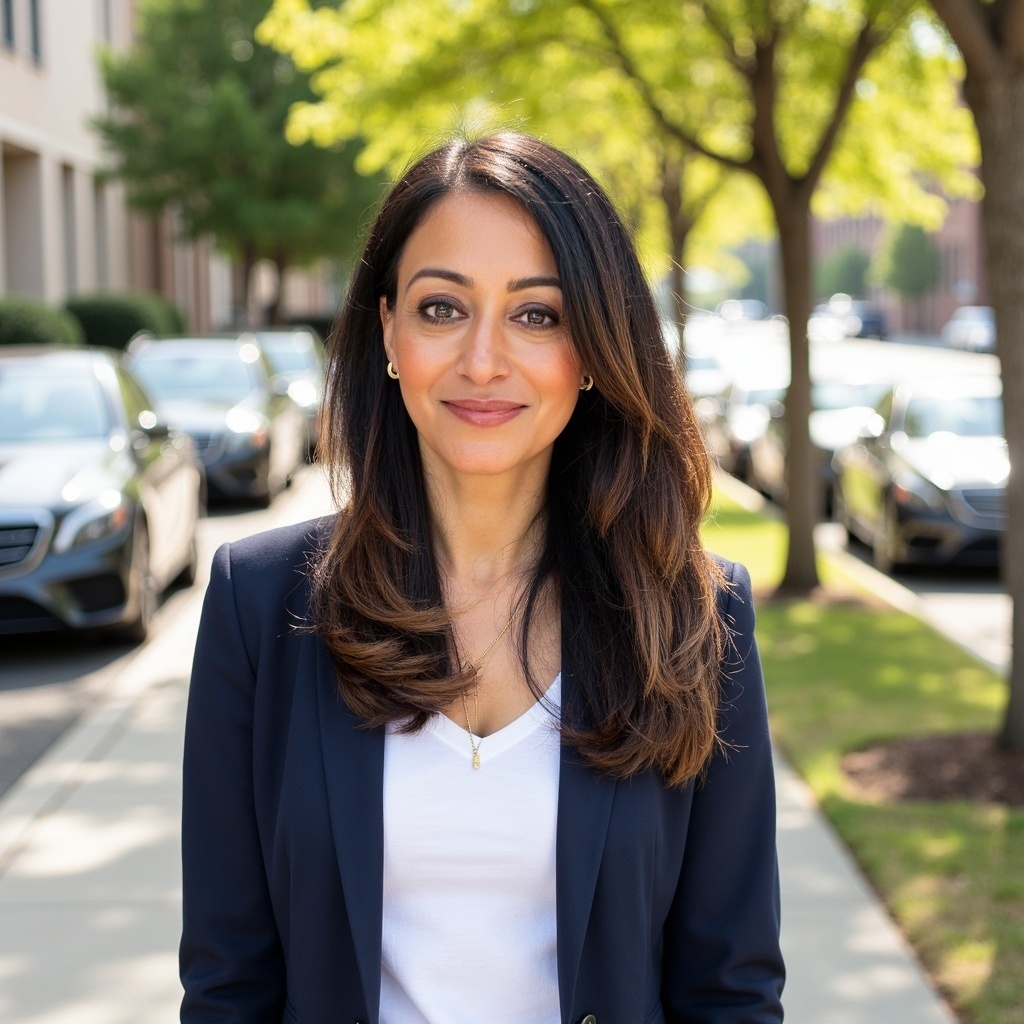
Transform your agency's quality performance with AI-powered micro education that closes gaps, ensures compliance, and empowers your clinical team.


HOP connects quality analytics, compliance tracking, and AI-powered micro education to help home health agencies improve outcomes.
Email : monika@myhop.ai